Hydrological restoration through drain removal, ditch infill, and reduced water abstraction in Aa dal Noord, Netherlands
Sponge Scapes case study NL 02
Regional Water Authority Aa and Maas provides a case study in their management area that is located in the wider river basin of the Meuse in south-east of the Netherlands, in the eastern part of the southern province of Brabant in the Netherlands. The area is charactierized by intensive agriculture (crops and livestock) and extensive artificial drainage of agricultural land has been carried out because excessively wet soils are more difficult for farmers to access and cultivate. At the same time the water system is also used to bring water to the agricultural fields from the Meuse river in periods of droughts and original water courses have been heavily modified to provide an efficient network of drainage and water supply, causing challenges for aquatic and riparian ecosystems. Combined sponge measures are implemented with insights from local stakeholders to increase the water retention of the landscape.
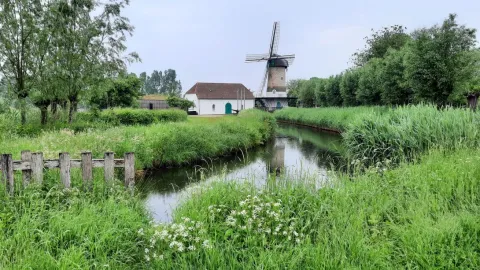


Overview
There is a high interest from the case owner, the regional water authority Aa and Maas, to further upscale visioning of sponge strategies in co-design with local stakeholders, including provincial government, other regional water authorities in the region, WWF-NL and local landowners / farmers organisations.
| Authority type | Authority name | Authority role | Comments | Authority responsibility |
|---|---|---|---|---|
| Regional / sub-national water authority | Waterschap Aa en Mass | Initiation of the measure | Project Owner | Responsible |
| Regional / sub-national water authority | Waterschap Rijn en IJssel | Initiation of the measure | — | — |
| Research institute / University | Wageningen University & Research | Monitoring | — | Supporting |
Site Information
Average catchment slope: 0.0007 m/m
River mainstem slope: 0.0004 m/m
Design and Implementation
Policy and Governance
Impacts and Monitoring
Monitoring System
quality has been implemented since 2018 to inform participating landowners about the impact of their farming practices on soil and water quality.