Holbina-Dunavat Restoration Project, Romania
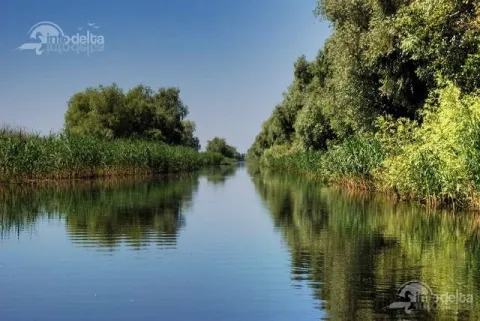
In the Danube Delta Biosphere Reserve, the ARBDD pursued ecological restoration by reconnecting the former Holbina–Dunavăț fish-farm basins to surrounding wetlands through breaches in the ring dikes, restoring natural hydrological exchange. The 5,630-ha complex was investigated from 1994, with works implemented in 2003–2004, and the project is recorded as complete. Post-restoration monitoring by the Danube Delta National Institute (2016–2017) in the Holbina 1 sector reported 25 fish species and a natural fish productivity of ~159 kg/ha/yr, indicating recovery of aquatic habitats. Today these areas are administered within the Biosphere Reserve and continue to appear in ARBDD annual activity reports (e.g., Holbina I, Holbina II, Dunavăț III). Socio-economic use has shifted towards regulated ecotourism and catch-and-release recreational fishing (e.g., Holbina – 3 Bibani), alongside traditional activities. Overall, the project has re-established wetland habitats, breeding grounds for fish and waterbird, and a sustainable local economy based on nature-compatible use.


Overview
Protect and maintain populations and habitats of high ecological value, and carry out ecological restoration where natural/semi-natural character had been lost.
Limit eutrophication risk by avoiding direct flushing with nutrient-rich canal water and using fringe marshes as nutrient filters (design premise for the restoration strategy).
Spatial scope (quantified): target area 5,630 ha (Holbina I 1,270 ha, Holbina II 3,100 ha, Dunavăț II1+2 1,260 ha).
| Authority type | Authority name | Authority role | Comments | Authority responsibility |
|---|---|---|---|---|
| Research institute / University | The Danube Delta National Institute for Research and Development, Tulcea | Monitoring | Scientific lead for ecosystem monitoring and pilot polder/wetland restoration tasks; conducted the Holbina-1 (2016–2017) study | Supporting |
| Local water authority | ARBDD | Initiation of the measure | Site manager/administrator for renatured enclosures; issues permits; contracts civil works for wetland restoration on behalf of DDNI under WB/GEF project; runs ongoing management & reporting (annual reports). | Responsible |
| National water authority | Government of Romania / Ministry of Environment | Financing | Recipient of the GEF grant and provider of state co-financing (e.g., US$0.5 M in 2000 for polder reconstruction); policy framework and oversight. | Supporting |
Site Information
Design and Implementation
Financing
Policy and Governance
Impacts and Monitoring
Monitoring System
Maintenance
Socio-economic Impacts
renaturation, the area is used for regulated recreational fishing and ecotourism; ARBDD designates Holbina 1 & Holbina 2 among the official recreational-fishing zones, under an ARBDD permit regime. A private operator at Holbina runs catch-and-release pike angling and lodging.
ARBDD’s management rules allow year-round grazing in the Dranov–Dunavăț complex (the Holbina/Dunavăț hydrological unit), indicating ongoing pastoral use.
Biophysical impacts: Hydrology
Biophysical impacts: Biodiversity
Biophysical impacts: Water & Soil Quality
Nutrients / reed-bed filtering (unexpected). Field studies found high retention of suspended silt and nitrogen in reed filters, but no effective phosphorus retention; in summer, reed beds acted as a phosphate source, contradicting the initial “nutrient filter” hypothesis. Implication: direct flushing with reed-filtered water could still drive eutrophication under stagnant conditions.
Peat acidity constraint. Holbina I–II sit on peat deposits whose generated acidity hampered fish-farm performance—one of the rationales for renaturation.
Lessons Learned
Hydro-ecology is bistable and sensitive to residence time. Holbina II toggled between turbid and clear-water states in the 1990s–2002; breach size/number/placement change residence time and sedimentation, which can tip the system either way. The recommendation was to retain the then-clear state and avoid major works unless accompanied by systematic study.
Post-restoration monitoring pays off. A DDNI one-year survey in Holbina 1 (2016–2017) recorded 25 fish species and ~159 kg/ha/yr natural fish productivity—evidence that functional habitat can recover and that outcomes are quantifiable for management.
Governance clarity was pivotal. A 2000 court decision confirmed DDBRA’s administrative/user rights over the area, removing a key procedural obstacle for restoration management and enforcement.
At program level, communication and participation matter. The World Bank’s implementation review flags early public-awareness and community involvement as critical—and warns not to rely on unconfirmed parallel investments (e.g., the EBRD loan) when designing restoration programs.
| Success factor type | Success factor role | Comments |
|---|---|---|
| Successful coordination between authorities | Main factor | Strong institutions & partnerships (DDBRA–DDNI with Dutch RIZA support) and targeted GEF/World Bank backing. |
| Existing institutional framework | Secondary factor | Legal/administrative clarity after 2000 enabling coherent site management. |
| Other | Secondary factor | Hydrological reconnection via breaches applied cautiously and adaptively. |
| Conducted assessments (incl. economic) | Secondary factor | Evidence-based monitoring (Holbina 1) to verify recovery and guide operations. |
| Conducted assessments (incl. economic) | Secondary factor | Programmatic learning loop from the Danube Delta Biodiversity Project (methods, indicators, replication). |