Restoration of Coastal Meadows in Matsalu, Estonia

Year of issue
2025
Summary

The measure was implemented in 2013 in Matsalu National Park (Natura 2000, Ramsar), at a former coastal meadow beside the large Salmi complex. Old, non-functioning field ditches were closed and scraped to restore wetland hydrology and breeding/feeding habitat for waders and amphibians. Grazing continued as before, with better access to drinking water for cattle.

Since then, the site has been managed as part of the wider Keemu–Salmi coastal meadow system (~360 ha) within a park that maintains ~3,000 ha of coastal meadows, among the largest in Europe. National guidance and the 2021–2027 Action Plan for semi-natural grasslands reinforce long-term maintenance (grazing/mowing, shrub control) and allow restoration actions such as closing drainage to keep meadows wet.

For fauna, Salmi–Keemu is a priority area for the natterjack toad; the species plan recommends sustaining sufficient grazing to keep short-sward habitat and preserving shallow, temporary pools created by micro-relief. In response to very high nest predation on coastal meadows, a pilot predator-control programme (2021–2024) was introduced at Keemu and Salmi to improve wader breeding outcomes.

Overall, the 2013 hydrological works are now embedded in park- and nation-wide management that keeps the meadows open and wet while targeting key bird and amphibian conservation needs.

The project was a rather small-scale restoration effort, which was originally intended to be expanded, but for various reasons this did not take place. No monitoring activities have been carried out to assess the effectiveness of the restoration.
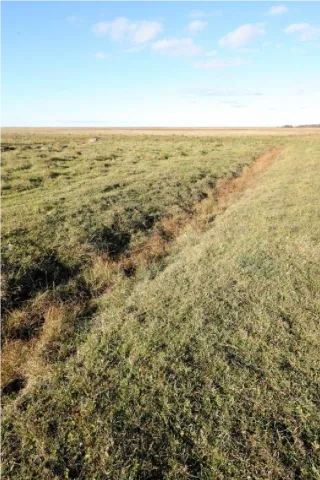
Photo Gallery
Location
58.7167, 23.6666
Project
NWRM
National ID
Estonia_01
Sector
Hydromorphology
Installation Date
2013
Implementation status
Completed
Contact
Sandra Oisalu, BEF Estonia

Overview

Location of the project
Salmi coastal meadow in western Estonia in Matsalu National Park (southern shore of Matsalu bay), rural coastal area, Natura 2000 and Ramsar site. The area of the Salmi coastal meadow is approximately 350 ha which makes it one of the largest complete coastal meadow massifs in whole Europe.
Country
Estonia
NUTS2 Code
Eesti
Sponge measures implemented in the case study
Wetland restoration and management
Objectives
Restore the hydrological regime by closing and scraping old field ditches to slow drainage from the meadow to the sea; this was the primary design target (“regulation of hydrological cycle and water flow”).
Recreate breeding/feeding habitat for waders and amphibians (and other protected species)
Keep existing bovine grazing unchanged while improving access to drinking water for cattle as a co-benefit.
Pilot/validate a restoration method (inspired by UK practice) for potential replication on other Estonian coastal meadows affected by old drainage.
Ditches treated: 12 small ditches, totaling ~3.9 km of ditch network closed/scraped.
Involved partners
Authority type Authority name Authority role Comments Authority responsibility
National water authority Estonian Fund for Nature Initiation of the measure Initiator, project manager, moderator between different stakeholders Responsible
Forest owners State Forestry Other Land owner Supporting
National water authority Agriculture board Other State institution responsible for agricultural aspects Responsible
Private property owners private land owners and renters Other Land owners Supporting
NGO Swedish WWF (World Wildlife Fund) Financing — Supporting
National water authority Environmental Board Other State institution responsible for environmental aspects Responsible
Documents
Document

Site Information

Climate Zone
Cool temperate moist
Elevation range
11 m
Slope range
2-5%
Vegetation class
Habitat site of rare species - Platanthera bifolia, Dactylorhiza incarnata). At the moment in ditches - Lythrum salicaria, Carex vulpina, Schoenoplectus lacustris, Mentha aquatica, Alisma plantagoaquatica, Sparganium emersum.
WFD Ecological status
Good
WFD Chemical status
Failing to achieve good
Water quality status
The wetland had good quality water, chemical status is good. It is a Nature2000 site. No pollution has been marked. The aim was not to rise the quality of water but to restore the hydrological regime.

Design and Implementation

Project scale
Meso
Project scale specifications
The total area was 11,15 ha but the works were carried out on concrete 12 small ditches(network of ditches was 3,9 km)
Project area
11,15 ha
Area subject to Land use change or Management/Practice change (ha)
11.50 ha
Size
3.90
Size unit
km
Principles
The aim of the application was to test in Estonia a new methodology for restoring a wetland (based on the example from United Kingdom) and to find out if this methodology can be used also for other similar areas with similar problems (old ditches that change hydrological conditions in nature protection areas).
Factor constraints
The method for restoring the wetland was chosen for testing by Estonian Fund for nature and it was done in frame of a project.
However, it was quite difficult to find common ground with
Environmental Board, Agricultural Board and State Forestry - Estonian Fund for Nature had two years of meetings with them before they could manage to complete the project.

Financing

Total cost information
Part of the costs were covered by WWF project - ca 11 500 eur - some parctical works and costs for meetings and travel. However, part of the costruction costs were paid by State Forest Management Centre in frame of one frame project so costs are not available.
Financing authorities
Authority name Type of funding
WWF Sweden Other
State Forest Management Centre National funds
Compensations
Non
Compensations annual information
No compansation for land owneres

Policy and Governance

Policy description
There are some species that depend directly on the water level of the coastal meadow. In the project area there were old ditches that caused the situation that water in the coastal meadow flew quickly to ditches and from there directly to the sea. Even though a lot of the ditches were by now filled with grass and did not direct water that quickly, they were still surprisingly deep and acted as drainage for the coastal meadow – water was collected in the ditches and stayed there and surrounding areas were dry. The aim was to close and scrape the ditches and in that way restore the natural hydrological regime of the coastal meadow and via that provide suitable habitat to different (incl. protected) species.
Policy targets
Improved Biodiversity
Target remarks
The aim of the application was to test in Estonia a new methodology for restoring a wetland (based on the example from United Kingdom) and to find out if this methodology can be used also for other similar areas with similar problems (old ditches that change hydrological conditions in nature protection areas).
Policy pressure
Directive Relevant pressure
WFD identified pressure 4.5 Other hydromorphological alterations
Other EU EU Biodiversity Strategy to 2020, restoring degraded ecosystems
Policy impact
Directive Relevant impact
WFD identified pressure Altered habitats due to morphological changes
Requirement directive
Requirement directive Specification
Other EU EU Biodiversity Strategy to 2020
WFD-achieving objectives for Protected areas Protection of habitats or species where the maintenance or improvement of the status of water is an important factor in their protection
Policy challenges requirements
Estonian Nature Protection Act aims to protect the natural environment by promoting the preservation of biodiversity through ensuring the natural habitats and the populations of species of wild fauna, flora and fungi at a favourable conservation status.
In the Estonian Environmental Strategy 2030 under the topic preservation of the diversity of landscapes and biodiversity there is and objective to ensure the existence of habitats and biotic communities necessary for the preservation of viable populations of species.
Part of a wider plan
Non
Public consultation
Non
Consultation activities
Activity stage Comments
Design phase There were stakeholder meetings which included also land owners but no larger public involvment was carried out.
Has contractual arrangements
Non

Impacts and Monitoring

Monitoring System

Monitoring requirements
As the works were finalised in 2013 then monitoring has not yet been possible. 2014 there is a plan to monitor the dams and see if they need improvement and after 5 years to see if the area is being used by birds and amphibians.
Monitoring parameters
No monitoring activites were actually carried out.

Maintenance

Maintenance requirements
No additional maintenance needed

Impact Assessment Methodology

Performance impact assessment method
Catchment outlet
Performance impact estimation information
The effectiveness of the measure depends on the habitat -if the species formerly identified in the coastal meadow (before the land improvement activities in the past) - so methodology will be counting the habitats

Socio-economic Impacts

Direct benefits information
Effective implementation of the measure will restore the habitat of the coastal meadow and will thus add to implementing the Nature Protection Act and Estonian Environmental Strategy 2030. As a Natura2000 and Ramsar site the restoration activity also contributes to their requirements.
Predator control required coordination with local hunters; in the pilot, hunter associations received a modest €1,000/season stipend, useful for planning long-term budgeting/replicability.
The site remains embedded in a park-wide managed meadow network (~3,000 ha), which concentrates grazing and visitor interest (Keemu tower area), strengthening legitimacy and continuity of management.

Biophysical impacts: Hydrology

Hydrological effects
Restored the hydrological regime of the area

Biophysical impacts: Biodiversity

Improved biodiversity
Oui
Information on improved biodiversity
The species ( rare species - Platanthera bifolia, Dactylorhiza incarnata). At the moment in ditches - Lythrum salicaria, Carex vulpina, Schoenoplectus lacustris, Mentha aquatica, Alisma plantagoaquatica, Sparganium emersum.) ave formerly (before the land improvement works) been living in the area so restoration works provided possibility to for suitable habitat conditions for the species. Hoowever, monitoring is needed to confirm if the species have returned.
Restoring wetland by closing old ditches that drained the area made it unfavorable for some protected species.
Coastal-meadow ponds at Salmi/Keemu are actively used by amphibians (egg masses recorded) and by feeding waders; camera work in 2015–2016 identified main nest predators as fox and corvids, with jackal and raccoon dog occasional.
Annual wader monitoring under LIFE Integrated “Loodusrikas Eesti” links hatching success tracking to restoration and predator control; in 2024/25, 44 foxes and 43 raccoon dogs were removed across sites to reduce predation pressure.

Biophysical impacts: Water & Soil Quality

Information on water quality overall
The wetland had good quality water, chemical status is good. It is a Nature2000 site. No pollution has been marked. The aim was not to rise the quality of water but to restore the hydrological regime.

Lessons Learned

Key lessons
Reaching common ground with different stakeholders is a time consuming process and need moderation in order to come to agreements satisfying all involved parties.
Hydrology restoration alone was necessary but not sufficient; predation is a key limiting factor for wader productivity on coastal meadows, so pair ditch-blocking + grazing with targeted predator management (timing, dens). Keep short sward and ephemeral pools for natterjack toad and waders. Embed projects within park/national plans for continuity and permissions.
Barriers
Barrier type Barrier role Comments
Lacking coordination between authorities Main barrier It was quite difficult to find common ground with Environmental Board, Agricultural Board and State Forestry - Estonian Fund for Nature had two years of meetings with them before they could manage to complete the project.
Other Secondary barrier Although there was enough information about this quite small and well known site, the State Forestry did not give permission to carry out the works without the official melioration plan for getting more data.
Drivers
Driver type Driver role Comments
Organisation committed to it Main driver The method for restoring the wetland was chosen for testing by Estonian Fund for Nature and it was done in frame of a project funded by WWF.
Success factors
Success factor type Success factor role Comments
Existing staff and consultant knowledge Main factor Engaged project team (Estonian Fund for Nature)
Financing possibilities Main factor As it was project based activity then there were financial sources to carry out the activities.
Transferability
The method can be used in future in many coastal areas formerly ditched in Estonia -there are cases where it is also listed in the management plan of this kind of action
Basin characteristics influence
The effectiveness of the measure depends on the habitat -if the species formerly identified in the coastal meadow (before the land improvement activities in the past) will return to the area.

Sources