Diverse Habitat Reconstructions in the Őrség National Park in Hungary

Year of issue
2025
Summary

Three measures were implemented in the Őrség National Park to rehabilitate habitats, all with water retention benefits. (1) Ponds were created in forests to collect run-off from forestry roads, providing safe breeding grounds for reptiles instead of temporary roadside puddles. (2) Shelterbelts, groves and wetlands were re-vegetated on agricultural land where such landscape elements had been removed about 50 years earlier. (3) Closures were built in drainage channels to allow seasonal flooding of alder (Alnus) forests and wet meadows, enhancing habitat quality and ecological connectivity along the Csörnöc stream.

Since then, restoration efforts have expanded. The Park Directorate and partners have secured significant new funding (2025) to restore wetlands, hay meadows and riparian zones. The ongoing “Living Landscape” project (2024–2026), led by the Barn Owl Foundation with the park’s involvement, is restoring a diverse landscape mosaic along the Hungarian Green Belt. Actions include creating new wetlands and ponds, re-establishing hedgerows and tree lines, and improving landscape connectivity. Earlier, agri-environment initiatives (e.g. 2021 “Dream contract” approach) promoted small-scale, multifunctional farming and micro-habitat creation, reinforcing both biodiversity and water retention in the park’s cultural landscape.
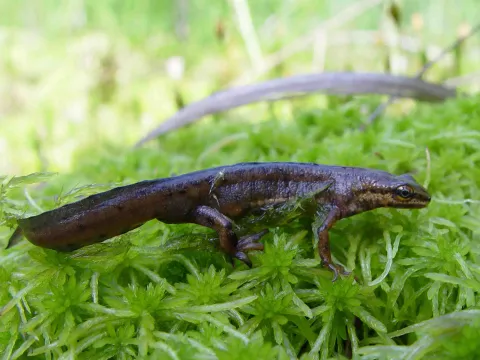
Photo Gallery
Location
46.84, 16.42
Project
NWRM
National ID
HU_4
Sector
Agriculture
Implementation status
Ongoing
Contact
Gábor Ungvári, REKK

Overview

Location of the project
The measures are in the Csörnöc–Herpenyő river valley at Nádasd (Vas County), within Őrség NP. This is between Körmend and Nádasd, with site access near National Road 86 (E65) that runs through Nádasd.
Country
Hungary
NUTS2 Code
Nyugat-Dunántúl
Sponge measures implemented in the case study
Buffer strips and hedges
Wetland restoration and management
Objectives
Create permanent small ponds in forest areas
Re-vegetate shelterbelts, groves, and wetlands
Install closures in drainage channels
Involved partners
Authority type Authority name Authority role Comments Authority responsibility
Nature park Őrség National Park Directorate Implementation National Park Supporting
Research institute / University Herman Ottó Institute Monitoring Grassland-HU LIFE IP Porject coordinator Responsible

Site Information

Climate Zone
Warm temperate moist
Temperature (°C)
9.20 °C
Vegetation class
A mosaic dominated by wet hay meadows and alder riparian forests (Alnus), plus hedgerows/shelterbelts and groves in the agricultural matrix - consistent with Natura 2000 unit HUON20008 Rába és Csörnöc-völgy and park documentation.
WFD Ecological status
Moderate
WFD Chemical status
Unknown

Design and Implementation

Project scale
Micro
Project scale specifications
The interventions are located in a specific part of Őrség National Park—primarily the Csörnöc–Herpenyő river valley near Nádasd (Vas County). Measures such as forest ponds, shelterbelt re-vegetation, and drainage closures are implemented at discrete sites within this local area, rather than across an entire river basin or multiple municipalities. While later projects (e.g. “Living Landscape”, LIFE IP GRASSLAND-HU) extend to broader park or Natura 2000 units, the original NWRM case study concerns localised hydromorphological and habitat restoration actions on small tributary sections and adjacent fields/meadows.
Project area
10–20 ha
Area subject to Land use change or Management/Practice change (ha)
13100.00 ha
Favourable preconditions
Positive way: The areas belong to the National Park only small territories were required to be purchased

Financing

Total cost
18200.00 €
Total cost information
LIFE IP GRASSLAND-HU (€16.83M total, national scope) + 2025 grant of 535M HUF (~€1.37M) for Őrség NP.
Costs investment
194400.00 €
Costs investment information
EUR 2012 Exchange rate
1st component breeding ponds 22,000€
2nd component habitat mosaics 154,300€
3rd component closures 18,100€
Costs land acquisition
2100.00
Costs land acquisition unit
€ (total value)
Costs operation maintenance
560.00 €
Costs operational
260.00 €
Costs operational information
1st component cleaning of the ponds
Costs maintenance
300.00 €
Costs maintenance information
2nd component for ten years initial care for the new habitat mosaicss
Financing authorities
Authority name Type of funding Comments Financing share
European Union EU-funds: LIFE+ LIFE IP GRASSLAND-HU (LIFE17 IPE/HU/000018) Total budget: €16,833,337; EU LIFE contribution: €10,099,999. 55.5%
European Union EU-funds: Cohesion and regional development funds European Green Belt BestBelt : “Living Landscape” project (2024–2026) —
Wetland/habitat restoration grant (2025) Other 535 million HUF (~€1.37 million) awarded to the Őrség NP Directorate for works in the park (including wetland, meadow, and riparian restoration). —
Compensations
Non

Policy and Governance

Policy description
Environmental degradation due to former agricultural and forestry practices.
Land ownership
Őrség National Park contains both state-owned land managed by the Őrség National Park Directorate (ŐNPI) and privately owned parcels (including farms) within its boundaries and Natura 2000 units.
Policy targets
Improved Biodiversity
Part of a wider plan
Non
Public consultation
Non
Has contractual arrangements
Non

Impacts and Monitoring

Monitoring System

Monitoring requirements
Monitoring follows the LIFE IP scheme, covering species/habitats, ecosystem-function recovery, and socio-economic effects, implemented by the Herman Ottó Institute with ŐNPI and other park directorates.
Monitoring parameters
Biological & habitat condition: presence/condition of target species and habitats at restoration sites within the Natura 2000 network (D.1).
Ecosystem functions
Socio-economic aspects: stakeholder/management impacts

Maintenance

Maintenance requirements
Routine habitat management—mowing/haymaking, invasive removal, woody clearance and site clean-ups—is carried out by Őrség NP staff (with LIFE IP support) to keep restored meadows and related habitats in good condition.

Impact Assessment Methodology

Performance impact assessment method
Unknown

Socio-economic Impacts

Direct benefits information
Agricultural management continuity: In meadows and wet grasslands, ongoing management through traditional mowing/haymaking maintained both biodiversity and the supply of hay, preserving a small-scale rural economy.
Employment and local economic activity: Follow-up projects such as LIFE IP GRASSLAND-HU and the 2025 wetland restoration grant have created seasonal work for habitat maintenance (mowing, invasive removal, planting) and for local contractors.
Tourism and education potential: While not quantified, measures improving landscape quality and biodiversity in Őrség NP contribute to the park’s eco-tourism appeal and provide opportunities for environmental education, which the Directorate promotes through guided visits and interpretation activities.

Biophysical impacts: Hydrology

Information on retained water
The three measures (forest ponds, re-vegetated shelterbelts/wetlands, drainage channel closures) were all designed to increase local water retention.

Biophysical impacts: Biodiversity

Improved biodiversity
Oui
Information on improved biodiversity
1st component: Collected run off in forest provide safe conditions for reptiles to breed - habitat provision. Flood security was not named among the services because the small scale of the sites.
2nd component, habitat mosaics in agricultural land provide habitat service, and amenity services. The nutrient reduction potential was not named.
3rd component the closure of the drainage channel provides stability to the wetland-forest ecosystem (amenities). It also enhances biomass production. Decreasing run off is obvious, but its scale is small in itself.
The site is an important element of the migration path along the stream †“ habitat services.

Lessons Learned

Key lessons
Rehabilitation of habitats where the initial status is still remembered and the land is already publicly owned is a "low hanging fruit" to implement. EU funds have an important role to make these changes happen. While at the same time these good examples are the first but not sufficient elements to initiate similar changes in privately owned agricultural lands.

One key lesson from this case is that small-scale, targeted interventions can deliver both biodiversity and water retention benefits when they are carefully adapted to local landscape structure. Creating forest ponds, re-establishing shelterbelts, and reconnecting floodplain meadows proved mutually reinforcing, improving habitat diversity while enhancing ecological connectivity along the Csörnöc stream.

Another takeaway is the importance of working with a mosaic of landowners. Some measures took place on state-managed land, others on private farmland through cooperation agreements. Building trust with farmers and integrating restoration into agri-environment schemes made it possible to implement actions beyond the park’s own land.

The project also shows that maintaining restored habitats requires long-term commitment. Without regular mowing, invasive control, and upkeep of planted elements, gains can be lost. Integrating these tasks into park operations and involving local partners ensures continuity.

Finally, the case underlines the value of linking site-specific actions to broader programmes. While the original works were local, they later benefited from alignment with larger initiatives such as LIFE IP GRASSLAND-HU and the “Living Landscape” project, which brought additional resources, monitoring frameworks, and visibility.
Drivers
Driver type Driver role Comments
Organisation committed to it Main driver The financial sources provided the possibility for implementing measures that were considered necessary.
Availability of subsidies Main driver —
Success factors
Success factor type Success factor role
Existing staff and consultant knowledge Main factor
Financing possibilities Main factor
Transferability
The measures are highly transferable to other rural landscapes with fragmented habitats and water retention needs. Success depends on tailoring pond placement, shelterbelt design, and drainage modifications to local hydrology and land use. Care is needed to secure landowner cooperation, ensure long-term maintenance, and avoid unintended waterlogging or conflicts with existing agricultural practices.

Sources