Diverse Habitat Reconstructions in the Őrség National Park in Hungary
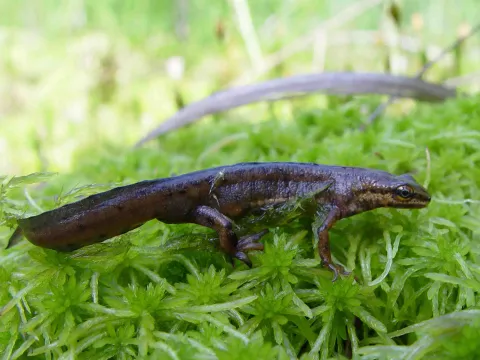
Three measures were implemented in the Őrség National Park to rehabilitate habitats, all with water retention benefits. (1) Ponds were created in forests to collect run-off from forestry roads, providing safe breeding grounds for reptiles instead of temporary roadside puddles. (2) Shelterbelts, groves and wetlands were re-vegetated on agricultural land where such landscape elements had been removed about 50 years earlier. (3) Closures were built in drainage channels to allow seasonal flooding of alder (Alnus) forests and wet meadows, enhancing habitat quality and ecological connectivity along the Csörnöc stream.
Since then, restoration efforts have expanded. The Park Directorate and partners have secured significant new funding (2025) to restore wetlands, hay meadows and riparian zones. The ongoing “Living Landscape” project (2024–2026), led by the Barn Owl Foundation with the park’s involvement, is restoring a diverse landscape mosaic along the Hungarian Green Belt. Actions include creating new wetlands and ponds, re-establishing hedgerows and tree lines, and improving landscape connectivity. Earlier, agri-environment initiatives (e.g. 2021 “Dream contract” approach) promoted small-scale, multifunctional farming and micro-habitat creation, reinforcing both biodiversity and water retention in the park’s cultural landscape.

Overview
Re-vegetate shelterbelts, groves, and wetlands
Install closures in drainage channels
| Authority type | Authority name | Authority role | Comments | Authority responsibility |
|---|---|---|---|---|
| Nature park | Őrség National Park Directorate | Implementation | National Park | Supporting |
| Research institute / University | Herman Ottó Institute | Monitoring | Grassland-HU LIFE IP Porject coordinator | Responsible |
Site Information
Design and Implementation
Financing
1st component breeding ponds 22,000€
2nd component habitat mosaics 154,300€
3rd component closures 18,100€
Policy and Governance
Impacts and Monitoring
Monitoring System
Ecosystem functions
Socio-economic aspects: stakeholder/management impacts
Maintenance
Impact Assessment Methodology
Socio-economic Impacts
Employment and local economic activity: Follow-up projects such as LIFE IP GRASSLAND-HU and the 2025 wetland restoration grant have created seasonal work for habitat maintenance (mowing, invasive removal, planting) and for local contractors.
Tourism and education potential: While not quantified, measures improving landscape quality and biodiversity in Őrség NP contribute to the park’s eco-tourism appeal and provide opportunities for environmental education, which the Directorate promotes through guided visits and interpretation activities.
Biophysical impacts: Hydrology
Biophysical impacts: Biodiversity
2nd component, habitat mosaics in agricultural land provide habitat service, and amenity services. The nutrient reduction potential was not named.
3rd component the closure of the drainage channel provides stability to the wetland-forest ecosystem (amenities). It also enhances biomass production. Decreasing run off is obvious, but its scale is small in itself.
The site is an important element of the migration path along the stream †“ habitat services.
Lessons Learned
One key lesson from this case is that small-scale, targeted interventions can deliver both biodiversity and water retention benefits when they are carefully adapted to local landscape structure. Creating forest ponds, re-establishing shelterbelts, and reconnecting floodplain meadows proved mutually reinforcing, improving habitat diversity while enhancing ecological connectivity along the Csörnöc stream.
Another takeaway is the importance of working with a mosaic of landowners. Some measures took place on state-managed land, others on private farmland through cooperation agreements. Building trust with farmers and integrating restoration into agri-environment schemes made it possible to implement actions beyond the park’s own land.
The project also shows that maintaining restored habitats requires long-term commitment. Without regular mowing, invasive control, and upkeep of planted elements, gains can be lost. Integrating these tasks into park operations and involving local partners ensures continuity.
Finally, the case underlines the value of linking site-specific actions to broader programmes. While the original works were local, they later benefited from alignment with larger initiatives such as LIFE IP GRASSLAND-HU and the “Living Landscape” project, which brought additional resources, monitoring frameworks, and visibility.
| Driver type | Driver role | Comments |
|---|---|---|
| Organisation committed to it | Main driver | The financial sources provided the possibility for implementing measures that were considered necessary. |
| Availability of subsidies | Main driver | — |
| Success factor type | Success factor role |
|---|---|
| Existing staff and consultant knowledge | Main factor |
| Financing possibilities | Main factor |