
Summary
On the Lower Danube between Silistra and Brăila, the LIFE project RESTOREWETLANDS (LIFE06 NAT/RO/000172) ran from 2006–2011 (eligible budget €1,017,396; EU contribution €489,209) to preserve, restore and sustainably manage the Small Islands of Brăila. Targets covered ~2,949 ha: planting alluvial forest on 449 ha, removing Amorpha fruticosa (planned 212 ha; achieved 237 ha), and restoring the natural hydrological regime on ~2,500 ha (incl. 1,366 ha of lakes). Forest and invasive-species actions met goals; however, prolonged floods limited lake works—Fundu Mare was only partial and the Navodari action failed.
The hydrological concept envisaged keeping permanent water via sluices in two zones (Egreta, Fundu Mare) and de-silting in a third (Navodari), with later expansion to other lakes; the plan also set out monitoring of siltation, banks and habitats.
Post-project reviews note that dredged channels re-closed where maintenance lapsed, reducing connectivity—an unexpected negative outcome.
Follow-up at Fundu Mare under EEA/SEE funding installed two sluices and channel works serving four lakes (~837 ha of open water); the park also maintains two educational water routes through light de-silting and removal of floating invasive vegetation.
Governance and planning have been updated with a Management Plan published by the park administration in 2024.
Photo gallery
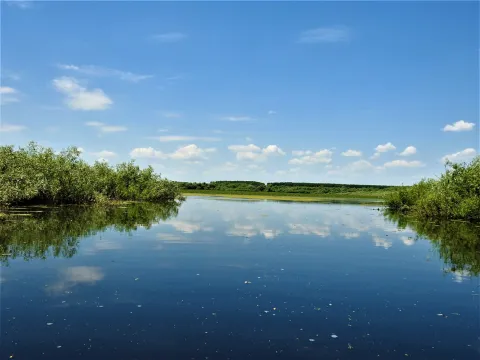

Overview
| Authority name | Authority role | Comments |
|---|---|---|
| Romanian National Forest Administration - Romsilva (NFA Braila Forest Branch) | Implementation | Park Administration |
| Bucharest University/Department of Systems Ecology and Sustainable Development, Romania | Implementation | Partners |
Site Information
Design and Implementation
Financing
RE-F.MARE (Fundu Mare island; 2015–2017) — EEA/SEE GrantsTotal value: €1,700,000 (7,503,630 lei).
Policy and Governance
Impacts and Monitoring
Monitoring System
Maintenance
Socio-economic Impacts
Biophysical impacts: Hydrology
Without upkeep, dredged channels closed again (loss of connectivity) - an unexpected negative outcome noted post-project.
Biophysical impacts: Biodiversity
Invasive removal: Amorpha fruticosa cleared from 237 ha (exceeding the 212 ha target).
Lessons Learned
Ambitious hydraulic targets need realistic phasing and access windows. Prolonged high waters during 2006–2011 curtailed works, with Fundu Mare only partially delivered and Navodari not achieved—contingencies for extreme hydrology are essential.
Ecological actions that are technically straightforward scale well. Alluvial forest planting (~449 ha) and Amorpha fruticosa removal (>212 ha) were completed as planned, in contrast to basin-wide hydrologic restoration.
Model-guided pilots help de-risk restoration. The Fundu Mare follow-up used hydrodynamic modelling and targeted sluices to stabilise open-water habitats, showing the value of adaptive, evidence-based design.
Governance continuity underpins outcomes. Updating the management plan and maintaining education/tourism use supports stewardship, but monitoring capacity (e.g., fish) still depends on equipment, permits, and staffing.
| Success factor type | Success factor role | Comments |
|---|---|---|
| Attitude of decision makers | Main factor | Continuous governance and a current management plan. |
| Financing possibilities | Main factor | Sequential funding (LIFE → EEA/Norway Grants → POPAM/POIM). |
| Conducted assessments (incl. economic) | Main factor | Hydrodynamic modelling guiding targeted hydraulic works. |
| Conducted assessments (incl. economic) | Secondary factor | Technically tractable habitat measures (forest planting, invasive control). |
| Public participation | Secondary factor | Active outreach and ecotourism that build local support. |