
Summary
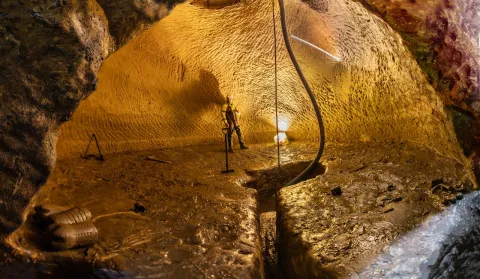
Domestic rainwater harvesting in Malta is the long-running Alter Aqua programme. Launched in 2011 in Gozo by GWP-Med with national partners, Alter Aqua installed and reinstated RWH in public buildings - first four Gozo schools for toilet flushing, plus additional school and farm systems - and a greywater unit at Gozo Stadium; it then expanded to Malta. By late 2024 the programme restored historic cisterns (e.g., Birgu) and launched a Reservoir Trail. In 2025 the new “Alter Aqua RECAP” phase adds a focus on domestic greywater recycling. EWA reports the programme now replenishes ~20 million L/year.
Malta’s policy context is distinctive: all buildings must incorporate a rainwater cistern, with sizing/drainage rules in Technical Document F; the 2024 Green Stormwater Infrastructure Manual links building guidance to practical use. A national Domestic Cisterns Restoration Scheme administered by the regulator (REWS) supports household upgrades and has been extended to 31 Dec 2025.
Overall, Malta pairs a deep cistern heritage with modern retrofits, incentives and education ; making RWH effective for non-potable uses and strengthening water resilience on a scarce island setting.
Photo gallery
Overview
In Gozo island : install 4 new RWH systems in 4 public schools (for toilet flushing) and reinstate 5 existing systems in 3 schools and the Experimental Farm (flushing/irrigation). A greywater unit was also installed at Gozo Stadium (programme bundle). These quantify the initial roll-out relevant to the case’s “domestic/ building” scope.
| Authority type | Authority name | Authority role | Comments | Authority responsibility |
|---|---|---|---|---|
| Research institute / University | Global Water Partnership – Mediterranean | Initiation of the measure | Programme lead/implementer; coordination, demo installations, capacity building and awareness. | Responsible |
| Other | The Coca-Cola Foundation / Coca-Cola Malta & General Soft Drinks Co. Ltd | Financing | Primary financier (Phase I) | Supporting |
| National water authority | Energy & Water Agency (EWA) | Other | National partner since 2014; supports/hosts activities; communicates results and later phases. | Responsible |
| Other | Education partners: MIO-ECSDE / MEdIES, Nature Trust Malta, EkoSkola | Other | Educational materials, teacher training, youth engagement. | Supporting |
| Other | Schools | Other | Site owners/operators for school RWH; students involved in monitoring water-use impacts at school level. | Responsible |
Site Information
Design and Implementation
agriculture and tourism sectors of the economy.
freshwater supply
Financing
Policy and Governance
Impacts and Monitoring
Maintenance
Impact Assessment Methodology
Socio-economic Impacts
Alter Aqua benefited >70,000 people (awareness, access to non-potable water) and continues expanding; quantified ~20 million L/year savings.
National incentive (Domestic Cisterns Restoration Scheme) uptake shows thousands of household beneficiaries (e.g., 5,292 in 2015–2016), indicating broad socio-economic reach of domestic RWH beyond this single site.
Biophysical impacts: Hydrology
Biophysical impacts: Biodiversity
Biophysical impacts: Water & Soil Quality
Biophysical impacts: Others
Lessons Learned
Reviving historic infrastructure works—if you pair restoration with present-day uses and outreach. Birgu’s reservoirs were rehabilitated (including heavy cleaning) and then showcased via a 12-stop Reservoir Trail, turning heritage into operational storage and public engagement.
Policy and incentives matter. A legal baseline requires cisterns in all buildings (Technical Document F), and RBMP measures and REWS grants support domestic systems—evidence that regulation plus funding accelerates uptake.
Robust site-level monitoring data are not always available. The NWRM fiche for this Gozo case reports no monitoring, limiting quantified biophysical evidence at site scale even as programme-wide numbers exist.
Scaling beyond RWH to greywater reuse still faces obstacles; the current Alter Aqua RECAP phase is explicitly designed to remove barriers and embed solutions into policy.
| Driver type | Driver role | Comments |
|---|---|---|
| Legal obligations | Main driver | Clear legal requirement for rainwater cisterns in buildings |
| Success factor type | Success factor role | Comments |
|---|---|---|
| Successful coordination between authorities | Main factor | Long-term partnership (GWP-Med, EWA, Coca-Cola Foundation/GSD) with successive phases. |
| Financing possibilities | Main factor | Public funding incentives for household cistern restoration (REWS scheme, extended to 2025). |
| Communication activities | Main factor | Productive reuse of heritage reservoirs plus strong public engagement (Reservoir Trail). |