
Summary
Summary
Urban constructions carried out by JVProjektvh which include the removal or sinking of existing curbs, lowering or adjustment of the surface, transfer of storm water from the area of street inlets to decentralized devices, taking apart gutters and street inlets within green areas.
It is still included in urbanism today, and mimicked in other cities.
Photo gallery
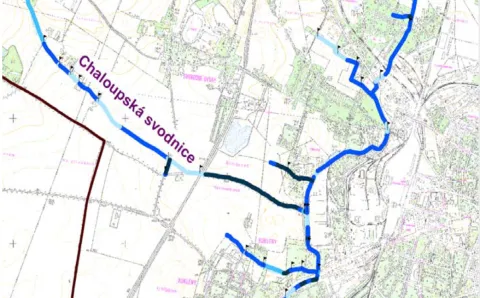

Overview
Year of issue
2025
Project
NWRM
Implementation status
Ongoing
Contact
Jovanka Ignjatovic
Location of the project
Hradec Králové, city of 90 000 inhabitants at the confluence of the Elbe and the Orlice.
Country
Czechia
NUTS2 Code
Severovýchod
Sponge measures implemented in the case study
Filter Strips
Soakaways
Involved partners
| Authority type | Authority name | Authority role |
|---|---|---|
| Local water authority | Municipality of Hradec Kralove | Initiation of the measure |
| — | DHI | Monitoring |
| — | JVProjectVH | Implementation |
Site Information
Climate Zone
Cool temperate moist
Precipitation
474.00 mm
Temperature (°C)
7.40 °C
Runoff
380.00 mm
Runoff coefficient
0.80
Elevation range
233
Design and Implementation
Project scale
Meso
Project scale specifications
This project takes into consideration a city as a whole.
Project area
24300
Area subject to Land use change or Management/Practice change (ha)
24300.00 ha
Size
332.00
Size unit
km
Basis of design
Return period for the design of retention volume: 5 years
Principles
The design of such project needs informations on the local conditions : underground status, infiltratbility of the soil, meteorology.
Constraints
The past few decades, Hradec Kralove has suffered from massive urbanization resulting in overloading of the system of natural and artificial water bodies as well as of the sewer system.
Favourable preconditions
Hradec Kralove was planned as a green city before the Second World War by architect Josef Gocar. Today, it is still an excellent example of clever urban planning. Stormwater drainage was solved as a first priority before starting planning the urbanization itself. Gocar designed a system combining natural water bodies and open vegetated channels. Moreover, infiltration systems were created in some areas.
Financing
Total cost information
There are no information at this stage
Policy and Governance
Policy description
Mising sustainable urban drainage systems (exceptions: rare individual projects and EU financed projects)
Land ownership
Only public-owned land or buildings
Policy targets
Runoff control
Part of a wider plan
Yes
Wider plan
| Wider plan type | Wider plan focus | Name | Comments |
|---|---|---|---|
| Local | Urban | City Development Plan | These areas were determined in the catchment and incorporated into the new City Development Plan processing |
Public consultation
Yes
Consultation activities
| Activity stage | Activity type | Key issues | Comments |
|---|---|---|---|
| Screening phase | Surveys | Individual issues | People were reached to inquire about any water problems they might know about. |
Has contractual arrangements
No
Impacts and Monitoring
Monitoring System
Monitoring parameters
Current status of stormwater management. No deep impact monitoring is carried out.
Impact Assessment Methodology
Performance impact assessment method
Unknown
Performance impact estimation information
The DAS HK incorporated extensive monitoring and surveys (rainfall, water levels, discharges, water quality parameters, ecological status of streams, catchment hydrogeology and infiltration potential etc.)
Hydrodynamic modeling of the sewer system, water bodies, artificial open channels, underground waters and elements of stormwater management was performed (MIKE Urban, MIKE11) and hydraulic capacity of the individual parts of the system as well as flooding frequency was assessed based on a 10-years rainfall data series. CSOs impacts were assessed with REBEKAII.
Paralelly, a groundwater flow model was created by Jacobs Consultancy.
Socio-economic Impacts
Direct benefits information
Reduction of the impervious area of the existing development by 15%; Long-term conception of the city stormwater drainage respecting sustainability principles.
Link rules and criteria of sustainable stormwater management within the region with the new City Development Plan.
Link rules and criteria of sustainable stormwater management within the region with the new City Development Plan.
Ancillary benefits information
The attitude towards stormwater management has started to change towards sustainability
Biophysical impacts: Hydrology
Information on increased water storage
Not increased the volume stored, technical measures in the planned development aim at approaching pre-urbanization runoff conditions (similar hydrograph volume and shape).
Information on runoff reduction
Improved runoff control by measures in the catchment, sewer system and open channels
Biophysical impacts: Biodiversity
Information on improved biodiversity
N/A info
Biophysical impacts: Water & Soil Quality
Water quality overall improvements
Not relevant for this application
Information on water quality overall
Sustainable sewage system allows a better protection of water bodies through a reduction of unwanted discharges.
Soil quality overall improvements
Not relevant for this application
Information on soil quality overall improvements
N/A info
Biophysical impacts: Others
Ecosystem impact climate regulation
Not relevant for the specific application
Lessons Learned
Key lessons
Study showd that:
- storm water management must be integrated into urban planning to guarantee sustainable development of the city;
- transparent step-by-step guidelines specifying activities and responsibilities at each level of urban planning from the stormwater management point of view must be prepared;
- this tipe of projects went beyond the current Czech legislation and can serve as a good example for similar studies.
Drivers
| Driver type | Driver role | Comments |
|---|---|---|
| Past flooding events | Main driver | Events exceeding the limit of the open channel |
| Organisation committed to it | Main driver | The willingness to create a demonstrator city in defining rules for greener infrastructure. |
Success factors
| Success factor type | Success factor role | Comments |
|---|---|---|
| Existing staff and consultant knowledge | Main factor | Decision support for city authorities and the building politics in terms of sustainable stormwater management were provided |
| Available support tools | Secondary factor | For the sewer network evaluation, a model from the Drainage Masterplan from 2005 was available |
Transferability
The same approach is applicable to any other city, as long as the urban planners are comitted to it.