
Summary
Sponge Scapes case study SI 08
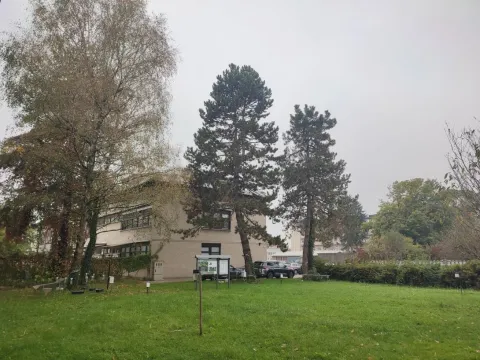
The rainfall partitioning study plot is situated in the city of Ljubljana, Slovenia and is part of the Gradaščica river catchment (that covers 160km2). The Gradaščica River has typical torrential characteristics in the headwater part of the catchment, which increases the risk of floods in the downstream areas that are populated and urbanized, such as the city of Ljubljana.
This case study research is not only key to evaluating the sponge function of forests but also holds significant interest for local stakeholders and the general population in terms of reducing flood and drought risks, as well as mitigating related issues like soil erosion.
Photo gallery


Overview
| Authority type | Authority name | Comments |
|---|---|---|
| Private property owners | Landowners | Landowners |
| Farmers | — | — |
| Other | Dobrova-Polhov Gradec | The municipality of Dobrova-Polhov Gradec in Slovenia |
| Other | Ljubljana | Capital and largest city of Slovenia |
| Other | Slovenia Forest Service | Zavod za gozdove in slovenian. The mission of Slovenia Forest Service is to preserve Slovenian forests and all of their functions with close-to-nature forestry. Effective and sustainable forest management and use are essential for conserving nature within forested areas, benefiting both present and future generations. |
| Research institute / University | Fisheries Research Institute of Slovenia | Zavod za ribištvo Slovenije in Slovenian |
Site Information
Design and Implementation
The Gradaščica river catchment covers 160 km² and is almost 70% forested.
Financing
No information provided for this section.
Policy and Governance
Impacts and Monitoring
Monitoring System
These high-frequency and long-term datasets are very useful in understanding the soil water retention capacity. However, it should be noted that making predictions for the entire catchment can be difficult due to high spatial variability and the anthropogenic character of the soil in the plot.
Long-term measurements of water level and river discharge in the catchment have been carried out at three gauging stations, two on Gradaščica and one on its tributary Šujica. In addition, there are three meteorological stations in the catchment area, namely, Dvor, Topol and Pasja ravan. These long-term hydrological and meteorological measurements will be essential in assessing the sponge function of forests in the catchment.
Impact Assessment Methodology
Lessons Learned
Sources
No information provided for this section.