
Summary
The Holter-Hammrich project combined several natural water retention measures: floodplain restoration, meadow and pasture rehabilitation, and reduced tillage. Located in north-west Germany within the Weser river basin (DE4000), it supports Lower Saxony's otter and wetlands protection programs and contributes to WFD goals. Since its implementation, the 240 ha flood retention polder—activated in 2011—has enhanced flood protection and become a key habitat for over 60 bird species and other wildlife, including the returning European otter. It now also serves educational and recreational purposes, with a 7 km nature trail and observation points. The project stands out for its integration of ecological, hydraulic, and public engagement goals, achieved through multi-stakeholder cooperation involving environmental agencies, water managers, local authorities, and farmers.
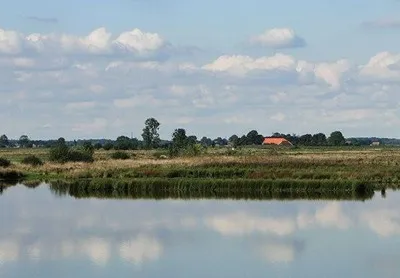
Photo gallery
Overview
| Authority type | Authority name | Authority role | Comments | Authority responsibility |
|---|---|---|---|---|
| Regional / sub-national water authority | Lower Saxony Water Management, Coastal Defense and Nature Conservation Agency (NLWKN) | Implementation | Promoter, developer, supervisor | Responsible |
Site Information
Design and Implementation
- landuse with different requirements (extensification)
- use of controlled water level increase in winter and spring
Subarea "Altes Tief" (80 ha) diverse mosaic of shallow water zones, shrubs, reeds and wet grassland - Mostly free vegetation development (succession)
- use of ca 40 ha year-round wet areas of shallow water
Financing
€5,500,000 Specially prepared trail for nature information and experience
€3,000,000 New Roads for farmers
Policy and Governance
The closure of the last dike breaches, and the further expansion of pumping stations for drainage of the area led to new problems: After heavy rainfalls flood loads led to higher water levels, dykes were threatened to breach leading to floods at unpredictable places. More storage space was needed and finally built for excessive headwater.
Extensification or abandonment of agricultural use and high water levels in spring support an increase of characteristic breeding birds for example.
Amphibians benefit from standing water bodies.
Nutrient Pollution
Biodiversity and gene pool protection in meadow areas
Habitat restoration
| Directive | Relevant pressure |
|---|---|
| WFD identified pressure | Nutrient pollution |
| Floods Directive identified pressure | Natural exceedance |
| Requirement directive | Specification |
|---|---|
| Other EU | Habitat Directive: Otter protection, habitat restoration |
| Name |
|---|
| Lower Saxony otter protection programme |
| Lower Saxony wetlands protection programme |
Impacts and Monitoring
Monitoring System
Maintenance
Impact Assessment Methodology
Socio-economic Impacts
Biophysical impacts: Hydrology
Biophysical impacts: Biodiversity
Biophysical impacts: Water & Soil Quality
Biophysical impacts: Others
Lessons Learned
| Driver type | Driver role | Comments |
|---|---|---|
| Organisation committed to it | Main driver | The NLWKN is the Nature Protection Agency of Lower Saxony |
| Availability of subsidies | Secondary driver | — |
| Success factor type | Success factor role | Comments |
|---|---|---|
| Communication activities | Main factor | A continuous and open discussion between all involved groups led to a high acceptance of the overall process. |
| Attitude of relevant stakeholders | Main factor | Willing stakeholders and a positive public perception were the major enabling factors. |
| Financing possibilities | Main factor | The availability of financial resources and cooperation between all stakeholders led to a smooth implementation of all measures. |