
Résumé
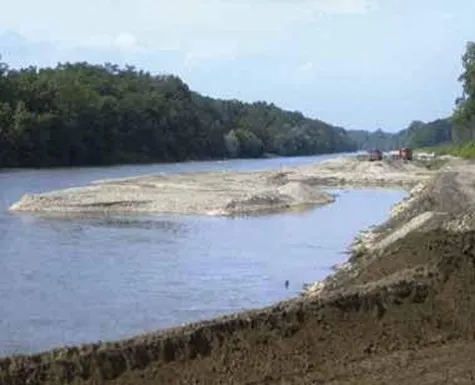
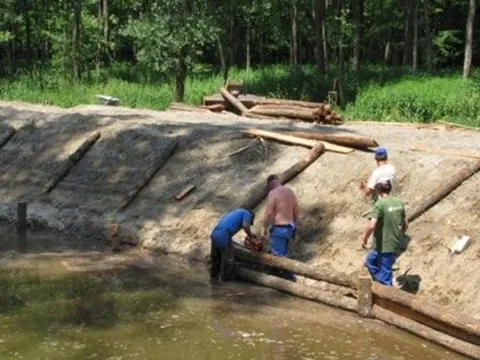
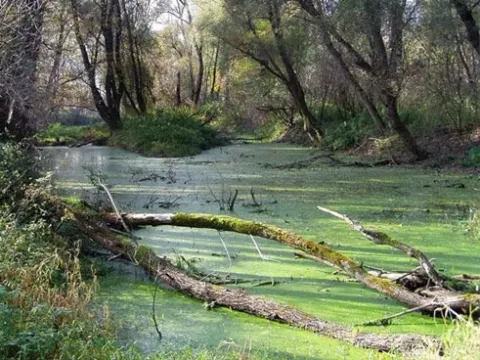
The BIOMURA project (LIFE06 NAT/SI/000066, 2006–2011) focused on conserving four Annex I habitat types along the Mura River in eastern Slovenia. Measures included reconnecting the main channel with side channels, securing adequate water intake at average and low flows, locally widening the riverbed, creating new side branches and backwaters, and sustainably maintaining alluvial forests. Works were implemented on the Bakovci–Mota reach and in villages such as Bunčani, Veržej, Melinci and others, with land purchase enabling habitat restoration. The project also established two information centres (Murska Sobota, Mota) and an educational trail in Veržej. These interventions improved hydromorphological processes, raised groundwater levels and enhanced habitats for riparian and endangered species, including amphibians, fish and birds. Funded by the LIFE programme, the Ministry of Environment and Spatial Planning, the Institute for Water of the Republic of Slovenia and partners, BIOMURA contributed to Natura 2000 site management and public awareness in the Pomurje region.
Photo gallery
Vue d'ensemble
| Authority type | Authority name | Authority role | Comments | Authority responsibility |
|---|---|---|---|---|
| Research institute / University | Institute for water of the Republic of Slovenia | Initiation of the measure | — | Responsible |
| Architects / Engineers | Ingeeniring for Waters (IZVO) | Monitoring | Supervision in restoration | Supporting |
| Local water authority | Mura Water Management company (Mura VGP) | Implementation | — | Supporting |
| Research institute / University | Institute of the Republic of slovenia for Nature Protection (ZRSVN) | Other | Professional national Institution | Supporting |
| Regional / sub-national water authority | Regional Development Agency Mura (PRA Mura) | Other | Responsible of some information actions | — |
| Other | Prleska Development Agency (PRA giz) | Other | Responsible of some information actions | Supporting |
| NGO | Society of Bird Research and nature conservation (DPPVN) | Other | Participation and support of some information actions | Supporting |
| NGO | World Wide Fund for Nature Austria (WWF Austria) | Monitoring | World Wide Conservation Organization; Participation and support of some information actions | Supporting |
Site Information
Design and Implementation
Although the Mura River has been straightened and the meanders cut-across, leaving behind oxbows, parts of the old channel are still recharged by the river, precipitation and groundwater. The processes of more relaxed, less controlled dynamics of the water flow, with a more frequent and easily spotted bank erosion, natural sediment transport and deposition, frequent flooding, river branches and oxbows, are especially present downstream of Veržej. The Mura river space in Slovenia, and at the reach bordering Croatia, is therefore among the richest ecosystems in Slovenia.
Financing
Costs incurred from the start date to 31/10/2011
Policy and Governance
River in Slovenia. In 2004 a large part of it has been declared the
Natura 2000 site (SPA Mura SI5000010 and pSCA Mura SI3000215). It is crucial that proper water management and management of forest and agricultural areas are implemented to stop ecological deterioration and to support existing biodiversity value.
Intensive water use, activities in the river and riverside space and the change of land use in the Mura River catchment (chain of hydropower plants on the Mura in Austria, flood protection structures and facilities, water supply, management of agricultural land, urban development) have considerably altered the river space. Most of all, they affect the bed-load discharge and processes of self-formation of the river space in Slovenia. At the border between Slovenia and Austria, the river bed of the Mura River has deepened by as much as 1.5 m in the last decades (by 33 cm on average), and there is a trend of slow deepening of the river bottom downstream of Petanjci and change of hydrological features of the Mura wetlands. Flood events occur less often and the low flow periods are longer, resulting in the gradual drying-out of the alluvial forests along the Mura. The water dynamics in oxbows, side branches and on the ground is becoming less diverse. The creative power of water, needed for operation of such a habitat structure, is diminishing. With improper management of forest and agricultural areas the ecological habitat conditions of these wetlands are deteriorating.
The conservation of targeted species for more than a third of the Natura 2000 qualification species on the Mura river should be ensured. Targeted species from that Annex II to the Habitats Directive include: 1 butterfly species (Callimorpha quadripunctaria), 1 amphibian species (Bombina bombina), 1 dragonfly species (Ophiogomphus cecilia) and 5 fish species (Misgurnus fossilis, Rhodeus sericeus amarus, Gymnocephalus schraetzer,
Umbra krameri, Aspius aspius). Also, it is assumed that the living conditions of 29 other species of birds, butterflies, dragonflies, amphibians, reptiles and mammals improved.
| Directive | Relevant pressure |
|---|---|
| WFD identified pressure | 3.1 Abstraction – Agriculture |
| WFD identified pressure | 3.2 Abstraction – Public Water Supply |
| WFD identified pressure | 4.1.1 Physical alteration of channel/bed/riparian area/shore of water body for flood protection |
| WFD identified pressure | 4.1.2 Physical alteration of channel/bed/riparian area/shore of water body for agriculture |
| Directive | Relevant impact |
|---|---|
| WFD identified pressure | Ecological status |
| WFD identified pressure | Alterations in discharge amount due to the uncontrolled water abstraction (e-flow) |
| Floods Directive identified pressure | Water body status |
| Requirement directive | Specification |
|---|---|
| WFD-achievement of good ecological status | Good ecological status and international collaboration |
| Floods Directive-mitigating Flood Risk | Flood protection and good ecological status |
| The Birds and Habitat Directives | — |
| Activity type | Comments |
|---|---|
| Workshops | 3 local (15th May 2007 in Ljutomer, 30th November 2009 in Mota and 17th November 2010 in Doklezovje) and 2 regional (4th June 2007 in Muska Sobota and 12th October 2011 in Mota) |
| Biomura newsletter | 10 Issues were published, 5 leaflets, DVD |
| Information Centre | Information centre with educational trail opened and 7 information pan |
| Name |
|---|
| Agreement with the Ministry of the Environment and Spatial Planning |
Impacts and Monitoring
Monitoring System
Maintenance
Impact Assessment Methodology
Socio-economic Impacts
Biophysical impacts: Hydrology
e.g., a 550 m new branch connected to the Besnica side arm; two chutes (drče) were built on the Mura; ~260 m of bank protection was removed near Bakovci to allow lateral widening; several backwaters (mrtvice) were deepened/created.
Biophysical impacts: Biodiversity
Amphibians. 11 species recorded 2007–2011; all renatured branches became important spawning sites, with immediate response (egg-mass counts, pairs, and individuals tracked at Bunčani, Veržej, Dokležovje).
Birds & forests. Very high densities of Middle Spotted Woodpecker and Collared Flycatcher in willow-dominated stands; actions expected to promote kingfisher, sand martin, and little ringed plover via eroding banks and gravel bars. (Qualitative/relative; no numeric densities given.)
Biophysical impacts: Water & Soil Quality
Biophysical impacts: Others
Lessons Learned
Another lesson is the importance of land acquisition in enabling restoration. Purchasing key parcels along the Mura allowed works to proceed without conflicting with agricultural land use, and secured the long-term management of restored habitats. Without this, maintaining restored structures and forest stands would have been much more challenging.
The project also demonstrated that a good knowledge and coordination of the tasks of each stakeholder is essential for completing works without serious problems. BIOMURA benefited from good organisation, mutual respect between partners, and joint engagement in preparing outreach materials such as a film, workshops, and field visits. This partnership model is considered successful and should be further developed in other environmental projects in Slovenia.
Thanks to the project, the local community recognised that nature is important and that both the European Commission and national authorities care about their Mura. Public engagement through information centres and educational trails fostered this connection, which is crucial for sustaining support in the long term.
Finally, BIOMURA highlighted the limits of local restoration in the face of larger-scale pressures. While side arms were rewatered and habitats improved locally, long-term issues such as regional groundwater decline and sediment deficit, driven by upstream regulation, remain unresolved. This underlines that site-level actions need to be integrated into basin-wide management to achieve lasting hydrological improvements.
| Driver type | Driver role | Comments |
|---|---|---|
| Legal obligations | Main driver | Habitats Directive and Birds Directive |
| Success factor type | Success factor role | Comments |
|---|---|---|
| Attitude of relevant stakeholders | Main factor | Good organization between stakeholders and assigned activities |
| Successful coordination between authorities | Main factor | — |