
Résumé
The Lonjsko Polje Nature Park, located along the Sava River, is one of the largest floodplains in Europe and a key retention area in the Croatian section of the Sava basin. Between 2006 and 2008, the restoration project aimed to improve the natural flood retention capacity of the floodplain by enhancing its ability to store excess water and reduce downstream flood risks. The intervention contributed to increasing the water retention volume from 634 million to 733 million cubic meters, using non-structural measures and improved management of embankments and natural flood dynamics. The area also serves as a vital biodiversity hotspot, especially for migratory birds and wetland habitats.
Since the original project, further efforts have continued under the Sava Parks II programme and national conservation strategies. As of 2025, restoration activities include the re-connection of former meanders, targeted flooding of over 200 ha of wetland areas, and the rehabilitation of at least 500 ha of degraded pastures in zones like Krapje Đol and Rakita. Monitoring and long-term management have been reinforced through the implementation of the PEM 103 management plan (2024–2033), including biodiversity tracking, invasive species control, and education programs. Remote sensing and satellite tools are now used to support environmental monitoring in collaboration with OIKON and the European Space Agency.
These ongoing efforts confirm the strategic importance of Lonjsko Polje for nature-based flood management, ecological restoration, and landscape-scale wetland conservation in the Sava River basin.
Photo gallery
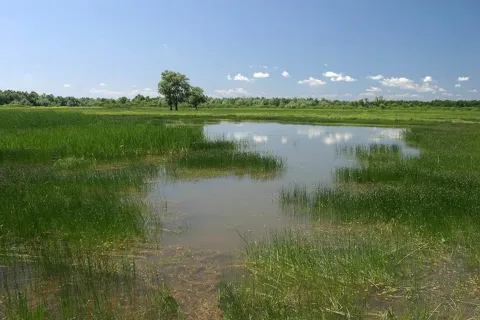


Vue d'ensemble
| Authority type | Authority name | Authority role | Comments | Authority responsibility |
|---|---|---|---|---|
| Nature park | Lonjsko Polje Nature Park | Implementation | Nature Park | Responsible |
| Regional / sub-national water authority | Croatian Water Agency | Financing | — | Supporting |
Site Information
Design and Implementation
Financing
Incremental costs are needed for important improvements to the system, which will secure the longterm sustainable use of the floodplains. Restoration and rehabilitation projects are needed to achieve an integrated water management.
Policy and Governance
| Directive | Relevant pressure |
|---|---|
| WFD identified pressure | 4.1.1 Physical alteration of channel/bed/riparian area/shore of water body for flood protection |
| WFD identified pressure | 4.2.2 Dams, barriers and locks for flood protection |
| Other non-EU | Croatia’s Nature Protection Act |
| Other non-EU | Ramsar’s Frameworks for managing Wetlands of International Importance |
| Directive | Relevant impact |
|---|---|
| WFD identified pressure | Altered habitats due to morphological changes |
| Wider plan type | Wider plan focus | Name | Comments |
|---|---|---|---|
| National | Water | Croatian Inland Waters Project | Funded by a World Bank loan. |
Impacts and Monitoring
Impact Assessment Methodology
Socio-economic Impacts
Incremental costs are needed for important improvements to the system, which will secure the long term sustainable use of the floodplains. Restoration and rehabilitation projects are needed to achieve an integrated water management.
Value added by the preservation and restoration plan results from the improvement of the nutrient sink capacity, protection of the valuable cultural and natural heritage, and the long-term conservation of large inundation areas for transboundary flood protection. The impact on the alluvial forest cannot been foreseen.
Biophysical impacts: Hydrology
Biophysical impacts: Biodiversity
Biophysical impacts: Water & Soil Quality
Biophysical impacts: Others
Lessons Learned
| Driver type | Driver role | Comments |
|---|---|---|
| Balancing different objectives | Main driver | In the year 2000, the World Bank recommended to adjust the 1972 plan to a flood protection scheme that takes into consideration the ecological and landscape diversity values of the floodplains. This 'World Bankplan' would propose measures to mitigate the detrimental impacts on the biodiversity caused by the implementation of the first phase of the 1972 plan. Additional objectives of this new approach are to stimulate the preservation and development of the natural and cultural heritage of the Sava area |
| Success factor type | Success factor role |
|---|---|
| Successful coordination between authorities | Main factor |