
Case Studies
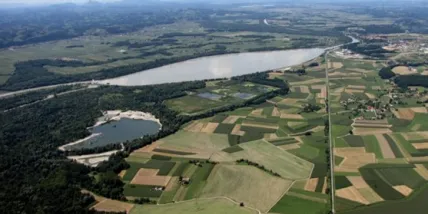
LiveDrava - Riparian Ecosystem Restoration of the Lower Drava River in Slovenia
Although the natural dynamics of the Drava River were heavily altered by three hydro-power plants, key lowland river features remain: side channels
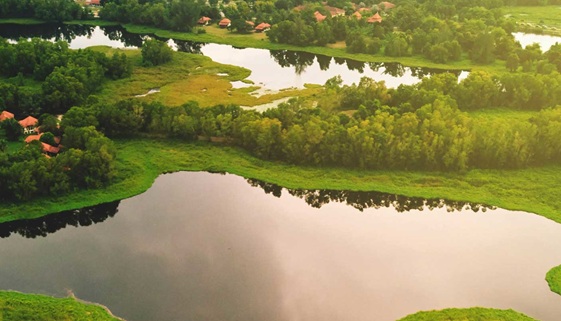
Living Lab 1 - Crau Aquifer, South-East France
The Crau plain is located on the French Mediterranean coast, forming a triangle between Arles, Salon-de-Provence and the Gulf of Fos.

Long-Term Floodplain Restoration in New Forest and Cole Catchments, United Kingdom
Sponge Scapes case study UK 06

Lunéville, Floodplain restoration and reconnection of hydraulic annexes, France
The 75 km-long Vezouze river regulary overflows, leading to increasingly violent floods especially in the urbanized sector of Lunéville, worsen by
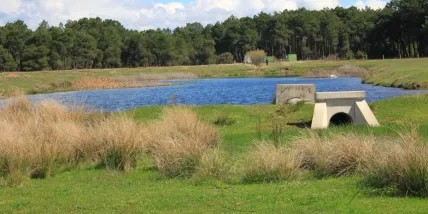
Managed Aquifer Recharge in Los Arenales (Segovia, Spain)
Managed Aquifer Recharge (MAR) in Los Arenales, Spain, aims to address severe groundwater overexploitation through the seasonal diversion of surplu
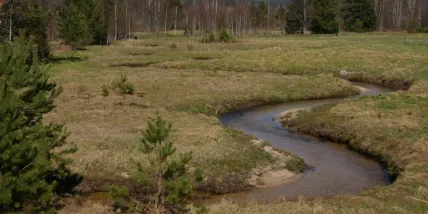
Mire restoration within the Sumava National Park, Czech Republic
The Ministry-coordinated programme in Šumava National Park restores natural (pre-drainage) water regimes to mires, stabilising water tables, reduci

Morphological restoration of temporary watercourses in the National Forest of Chaux
Chaux Forest is a timber production area threaded by many small, originally sinuous headwater streams.
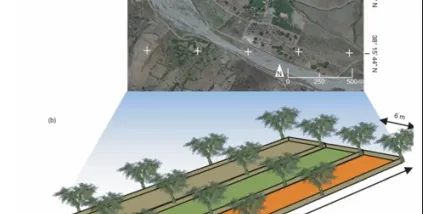
Mulching as best management practice to reduce surface runoff and erosion in steep clayey olive groves in Locri, Southern Italy
This study assessed saturated hydraulic conductivity (Ksat), surface runoff (SR) and soil erosion (SL) under rainfed conditions, at plot scale, ove

Multi-purpose water management development along the Körös-ér, Hungary
The Körös-ér catchment lies in a drought-prone part of Hungary and is a heavily modified water body with nutrient inputs from urban and agricultura
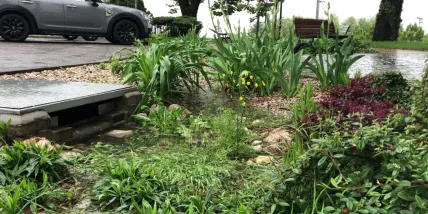
Municipality of Santorso sites, Italy
In Veneto (Italy), floods, landslides and erosive phenomena have severely affected the region in recent years.
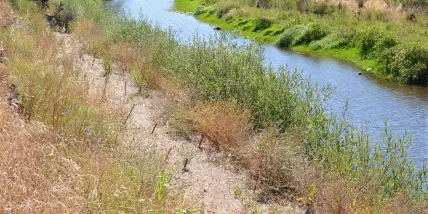
Natural bank stabilization and riparian buffer galleries along the Odelouca River, Portugal
The Odelouca River: Natural bank stabilization and riparian buffer galleries as part of mitigation and compensatory measures and through the use of
No Tillage Field Trials in lower Austria
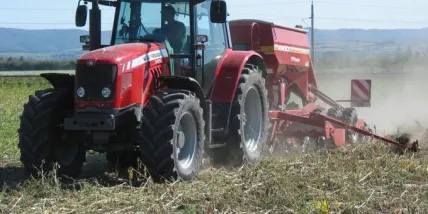
In the framework of a research programme, no tillage field trials have been installed in lower Austria.
Nummela 'GATEWAY' Wetland Park, Finland
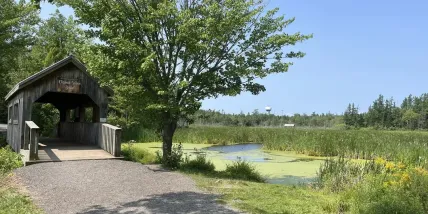
In 2010, the Nummela Gateway Wetland Park (2 ha) was built as both a water-quality mitigation landscape and an urban park.

Online Ponds in Riseholme, United Kingdom
Sponge Scapes case study UK05
Is the Riseholme site effective as a form of flood risk management using sponge measure?
OPTAIN : Bassin de la Petite Glâne
The case study area “Petite Glâne” belongs to the Broye catchment in the southwestern part of the Swiss Plateau.
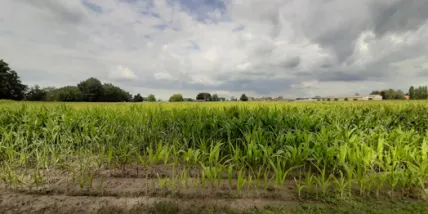
OPTAIN : Bassin versant de la Wimbe [Belgique]
Le bassin de la Wimbe couvre environ 112 km² et est classé comme une biorégion continentale. Le bassin comprend les masses d’eau LE8-10.
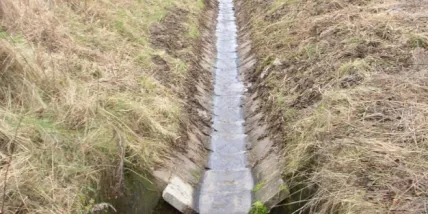
OPTAIN : Čechtický stream catchment [Czech Republic]
The Cechticky stream catchment case study is located at the Central Bohemian Region of the Czech Republic.
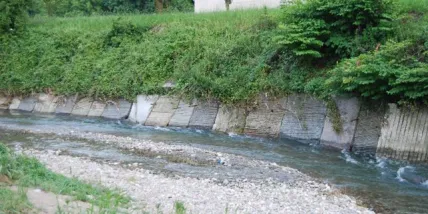
OPTAIN : Cherio river basin [Italy]
The Cherio River basin is located in the eastern part of Bergamo province, Lombardy region.
OPTAIN : Csorsza and Felső-Válicka [Hungary]
The Csorsza case study is located in Veszprém County, Hungary.
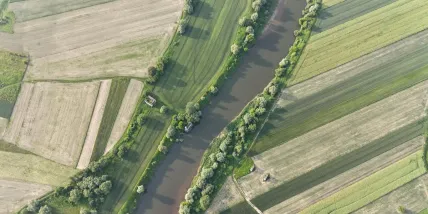
OPTAIN : Dviete [Latvia]
Main nature values are the eutrophic floodplain meadows, which provide nesting sites for the corn-crake (Crex crex) and other rare bird species.
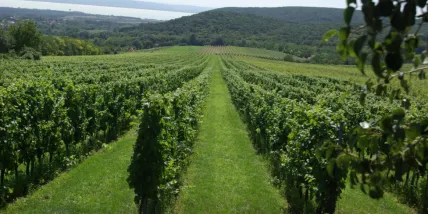
OPTAIN : Kebele and Szentgyörgyvölgyi valley [Hungary/Slovenia]
HU: The Hungarian part of Kebele catchment with its 209 km2 size is located in the south-western corner of the country, in the West-transdanubian W

OPTAIN : Kråkstad Catchment [Norway]
The Kråkstadelva catchment, as case study area, is located within the Hobølelva watershed, located ca. 30km S-SE of Oslo, Norway.
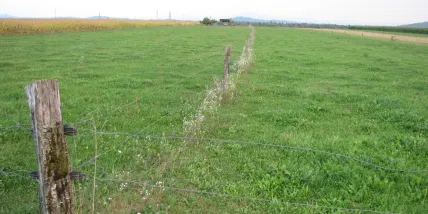
OPTAIN : Pesnica river catchment [Austria/Slovenia]
The Pesnica river catchment is characterized by intensive agricultural production, mainly cattle/pig breeding and arable farming.