
Case Studies


Agroforestry in Tuscany within AGROMIX, Italy
Agroforestry in Tuscany links farm practice and research to build climate resilience.

Alzette river restoration in Dumonshaff, Luxembourg
In the 1950s–60s, the Alzette floodplain was straightened for intensive agriculture, reducing water retention and ecological value.
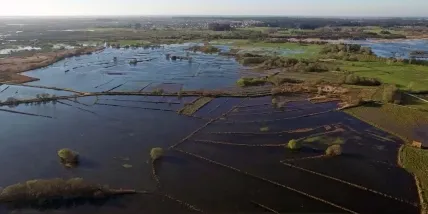
Baixo Vouga Lagunar (BVL) bocage landscape, Portugal
This is a traditional practice in the Baixo Vouga Lagunar Area (Aveiro District, Vouga River Estuary, Portugal), since 19th century in order to pro
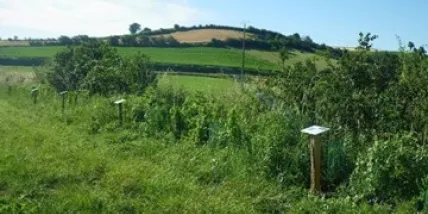
Buffer Strips and Floodbreak Hedges in Lèze Catchment, France
Sponge Scapes case study 03 FR

Controlled drainage and adjustable weirs in agricultural parcels in Flanders, Belgium
This case study documents applied research in Flanders that tested and scaled controlled drainage and simple adjustable weirs on arable land.
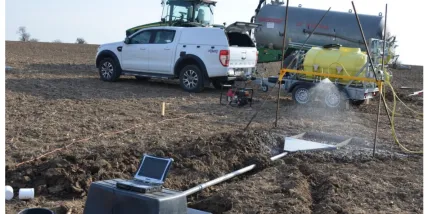
Controlled Traffic Farming on steep arable land near Nitra, Slovakia
This case study documents a long-term Controlled Traffic Farming (CTF) experiment on a 16 ha steep arable field operated by the Slovak University o
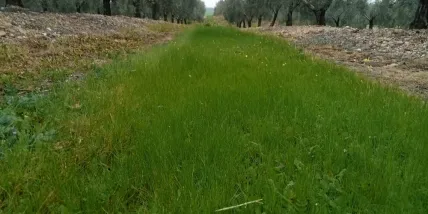
Cover Crops and No-Tillage in an Olive Grove (Andalusia, Spain)
“La Conchuela” is a commercial olive orchard located about 10 km west of Córdoba, Andalusia, near the A-431 road.
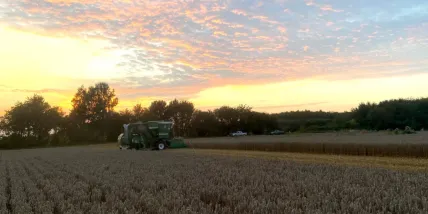
DaLeA – permanent living mulch in arable farming in Germany
EIP-AGRI Operational Group “DaLeA” tested a clover-based permanent living mulch interplanted with arable main crops to suppress weeds, regulate soi
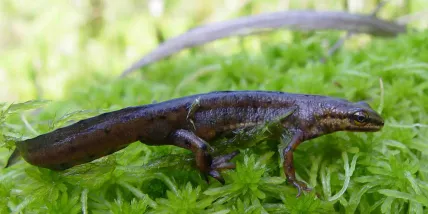
Diverse Habitat Reconstructions in the Őrség National Park in Hungary
Three measures were implemented in the Őrség National Park to rehabilitate habitats, all with water retention benefits.

Erosion control by agricultural and forestry techniques and soft hydraulics in the Bas-Rhin
Bas-Rhin is highly exposed to muddy runoff during spring–early-summer storms, impacting villages downstream of cropped slopes.

Field margins in Heilbronn, Germany
Since 1992, the city of Heilbronn (Germany) has implemented a field margin programme to reduce erosion, improve water infiltration, and promote bio
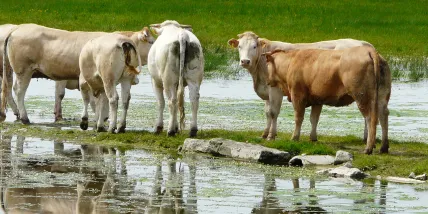
Flood meadows in the Marais Poitevin, France
Located in Pays de la Loire and Nouvelle-Aquitaine, the Marais Poitevin is France’s second-largest wetland.
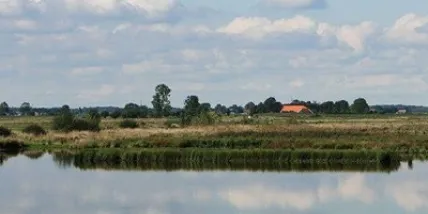
Holter-Hammrich Area - Flood Protection and Nature Conservation, Germany
The Holter-Hammrich project combined several natural water retention measures: floodplain restoration, meadow and pasture rehabilitation, and reduc
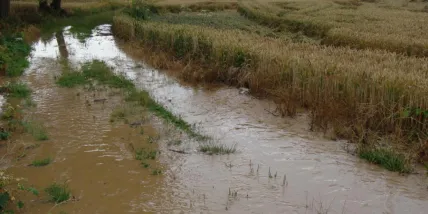
Horstergrub sediment management, Belgium
Upstream of ’s-Gravenvoeren (Voeren), the Horstergrub measure keeps muddy runoff in the valley with an earthen dyke/dams, and farmland was shifted

Hydrological restoration through drain removal, ditch infill, and reduced water abstraction in Aa dal Noord, Netherlands
Sponge Scapes case study NL 02
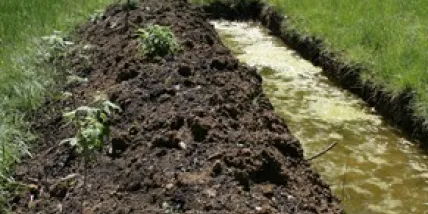
Keyline Design for a Permaculture Farm in Cairo Montenotte, Italy
This project is a permaculture-based regenerative agroecological farm and agritourism initiative located in Cairo Montenotte, Italy.

Lunéville, Floodplain restoration and reconnection of hydraulic annexes, France
The 75 km-long Vezouze river regulary overflows, leading to increasingly violent floods especially in the urbanized sector of Lunéville, worsen by
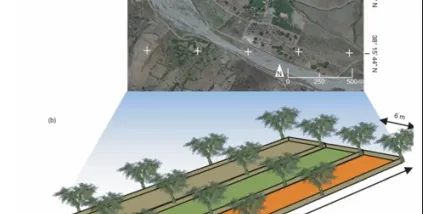
Mulching as best management practice to reduce surface runoff and erosion in steep clayey olive groves in Locri, Southern Italy
This study assessed saturated hydraulic conductivity (Ksat), surface runoff (SR) and soil erosion (SL) under rainfed conditions, at plot scale, ove
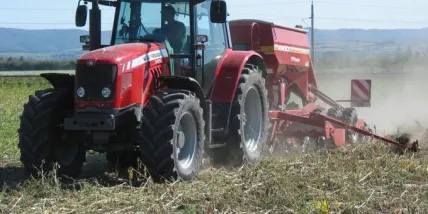
No Tillage Field Trials in lower Austria
In the framework of a research programme, no tillage field trials have been installed in lower Austria.
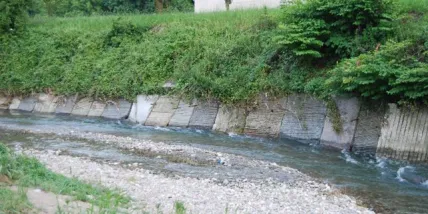
OPTAIN : Cherio river basin [Italy]
The Cherio River basin is located in the eastern part of Bergamo province, Lombardy region.
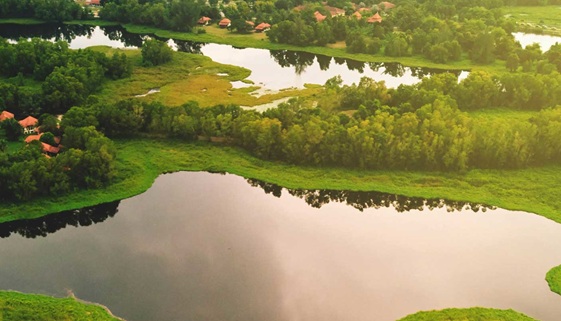
OPTAIN : Csorsza and Felső-Válicka [Hungary]
The Csorsza case study is located in Veszprém County, Hungary.
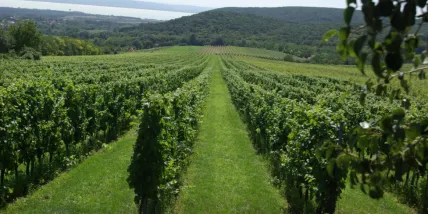
OPTAIN : Kebele and Szentgyörgyvölgyi valley [Hungary/Slovenia]
HU: The Hungarian part of Kebele catchment with its 209 km2 size is located in the south-western corner of the country, in the West-transdanubian W

OPTAIN : Kråkstad Catchment [Norway]
The Kråkstadelva catchment, as case study area, is located within the Hobølelva watershed, located ca. 30km S-SE of Oslo, Norway.
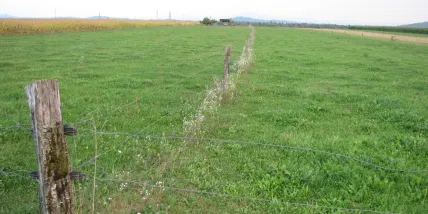
OPTAIN : Pesnica river catchment [Austria/Slovenia]
The Pesnica river catchment is characterized by intensive agricultural production, mainly cattle/pig breeding and arable farming.